
Farming & Resources
Lightyear Frontier Crops Guide
Crops grow on three soil types: Nitrogenic, Phosphoric and Potassic. Matching a crop to its soil gives a normal or high-yield harvest; planting it on the wrong soil can produce a mutated crop. Harvesting changes the mound to the harvested crop’s type, which is the basis of rotation planning.
Scope: The eight-crop table is the current wiki data, but the wiki itself marks it as awaiting full current-version verification. 1.0 adds four more crops without publishing their names, types or growth times. The 2024 planting and rot rules are kept with their version label.
On this page
Three soils, three harvest outcomes
Every crop belongs to one of three soil types. Plant it on a matching mound and the harvest is normal or high-yield; plant it on a different mound and the harvest can be mutated. The exact outcome depends on the crop and the soil, so the type matters more than the crop’s name alone.
After harvest, the mound changes to the type of the crop you just collected. That is why a field can be “programmed” with a rotation: each harvest prepares the soil for the next crop. Fertilizer and Mulch let you change the soil without waiting for a previous harvest.
- Nitrogenic crops: Wheat, Chromaize, Zappertwig.
- Potassic crops: Polyberry, Caroot, Honeybottle.
- Phosphoric crops: Rabbage, Lumbloom.
High-yield rotation versus mutation rotation
A high-yield rotation keeps planting crops on a soil that already matches their type. A mutation rotation deliberately plants a crop on a different soil to force the mutated result. The community infographic gives a simple high-yield example: Wheat (Nitrogenic) → Polyberry (Potassic) → Rabbage (Phosphoric) → Wheat again. Each harvest creates the next soil type, so the loop can repeat.
For mutation farming, reverse the logic: plant the crop on a soil that does not match its native type. The wiki lists the pairing table, but its own note says the data is being verified for the current update. Check the result in-game before you build a large mutation field.
Known eight-crop table
The table below is the clearest current reference for the older crop set. Growth days and native regions are from the wiki page; the 1.0 four new crops are not included because their names and values were not published in the official notes or the accessible guides.
| Crop | Soil | Growth | Native region |
|---|---|---|---|
| Wheat | Nitrogenic | 1 day | Outset Grasslands |
| Polyberry | Potassic | 2 days | Outset Grasslands |
| Rabbage | Phosphoric | 2 days | Outset Grasslands |
| Caroot | Potassic | 3 days | Outset Grasslands |
| Chromaize | Nitrogenic | 3 days | Hexagon Valley |
| Honeybottle | Potassic | 4 days | Frostpeak Ridge |
| Lumbloom | Phosphoric | 4 days | Frostpeak Ridge |
| Zappertwig | Nitrogenic | 4 days | Hexagon Valley |
Known eight-crop set. The 1.0 four new crops are a separate, still-unnamed group.
Plant, water, harvest and avoid rot
Clear or create a mound, plant the seed, and connect water. The 2024 farming guide warns that a mature crop left in the field too long will rot, so harvest when the crop is ready instead of leaving the field as decoration. The same guide notes that seeds and resources do not refresh until the region is restored.
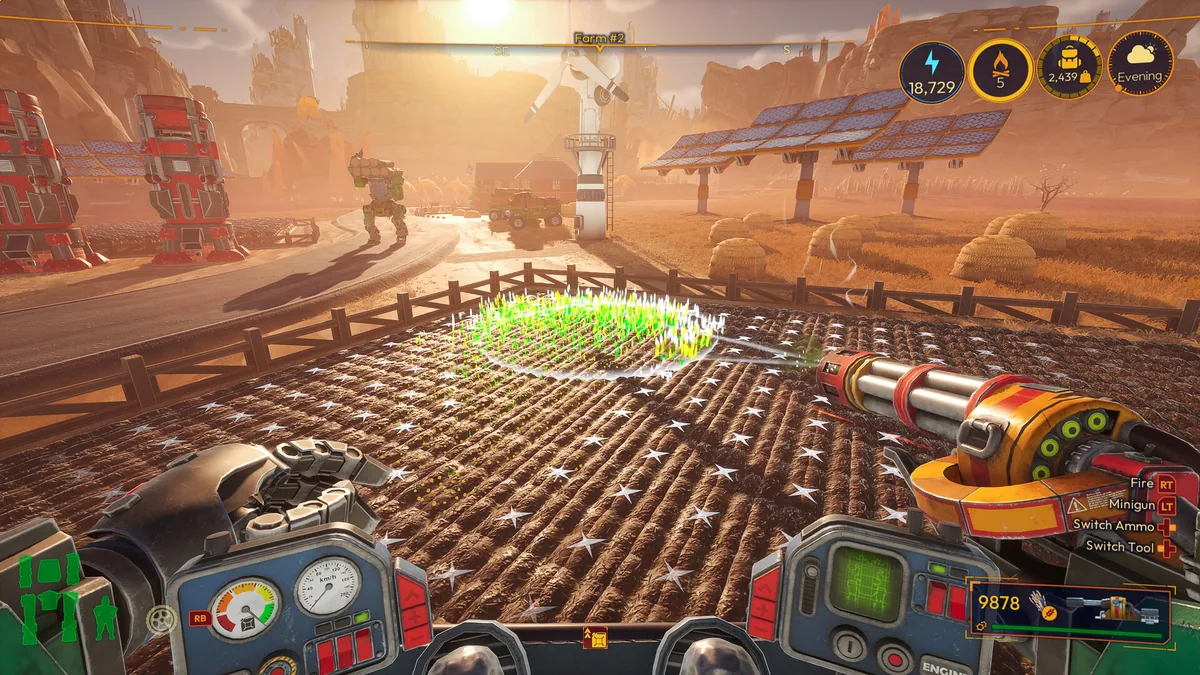
Seeds come from native plants and seed pods in each region, plus the Seed Splicer for guaranteed mutated seeds. The 1.0 Seed Stacking change keeps repeated seeds together, and the Seed Minigun makes large fields much faster to plant. Both reduce inventory and planting friction; neither changes the soil rules.
What 1.0 changed in farming
The official 1.0 notes add four crops, Seed Stacking, the Seed Minigun, a clearer crop-rotation HUD, improved mutated crops and a fertilizer overhaul. The old “Fertilizer” that changed a mound’s type is now called Mulch; the new Fertilizer increases yield, and the Compost Box is now the Fertilizer Infuser.
The practical result is that 1.0 is more forgiving to plant and read, but the exact new-crop table is still missing. Do not treat the eight-crop table as a complete 1.0 list, and do not invent names for the four new crops.
Questions
Common questions
How do I mutate a crop?
Plant a crop on a soil type that does not match its native type. The wiki lists the pairings, but the table is still marked for current-version verification; confirm the result in-game before scaling a mutation field.
What is the best crop?
There is no single best crop without a goal. Wheat is the fastest known crop, Polyberry and Rabbage are short two-day crops, and Honeybottle, Lumbloom and Zappertwig take four days. Choose by the recipe, animal feed or mutation you need.
Do crops rot?
The 2024 farming guide says a mature crop left too long will rot. 1.0 did not publish a change to that rule, so harvest on time and treat the old warning as still applicable until the current build is tested.
What are the four new 1.0 crops?
The official notes confirm four new crops but do not name them. The accessible wiki and guides do not provide a complete 1.0 table, so this page does not invent names, growth times or seed sources.
Sources
What this page is based on
- wiki.gg – Crops ↗Soil types, crop table and rotation notes; the wiki marks the data as awaiting current-version verification.
- Reddit – crop farming infographic ↗Community explanation of soil conversion and a high-yield rotation example.
- TechRaptor – farming guide ↗2024 planting, watering, harvesting and rot rules.
- Official 1.0 launch notes ↗Four new crops, Seed Stacking, Seed Minigun, rotation HUD, Mulch and Fertilizer changes.
Facts checked